How Carbon Capture and Storage works
Carbon Capture and Storage (CCS) is a key technology for reducing carbon dioxide (CO2) emissions from industries where alternatives are limited. Denmark’s North Sea plays an important role in advancing CCS and supporting Europe’s climate ambitions.
What is Carbon Capture and Storage?
Carbon Capture and Storage (CCS) is a technology designed to prevent CO2 emissions from entering the atmosphere. It involves capturing CO2 from industrial processes, transporting it to a suitable location, and storing it securely deep underground in geological formations.
CCS is particularly relevant for hard‑to‑abate sectors such as cement, chemicals, and energy‑intensive industries, where emissions cannot be eliminated through electrification or other means alone. By combining CCS with renewable energy and efficiency measures, it supports the transition to a lower‑carbon energy system.
How does it work?
CCS consists of four main steps:
1. Storage
The geological formations provide safe and permanent storage for CO2, ensuring it remains trapped and does not escape. Typically, CO2 is stored at depths below 800 meters, where the pressure and temperature conditions keep it securely contained.
2. Capture
CO₂ is captured from sources such as power and waste-to-energy plants, chemical plants, or cement factories. The captured CO2 is separated from other gases before being prepared for transport.
3. Liquefaction and Transport
Once captured, the CO2 is compressed and cooled into a liquid state. It is then transported to a CO2 export terminal, where it is then transported either by ship or pipeline, depending on location and project, to the offshore storage site in the Danish North Sea.
4. Injection
At the offshore site, the CO2 is injected deep underground into geological formations like depleted oil and gas fields or deep saline aquifers beneath the seabed. Saline aquifers are underground layers of water-bearing rock that contain salty water. The project reuses, when possible, existing wells and infrastructure from previous oil and gas production, reducing both costs and environmental footprint.
Why is CCS important?
CCS helps reduce the amount of CO2 in the atmosphere. This process is crucial for industries that are challenging to decarbonize, as it allows for significant emission reductions while accelerating the transition of the energy sector.
Without CCS, Denmark and Europe will not be able to achieve climate neutrality. The European Carbon Management Strategy, adopted in February 2024, includes developing CO2 transport infrastructure, necessary for establishing a CO2 market in Europe. The goal is to create a CO2 storage capacity of at least 50 million tons per year by 2030, with a progressive increase to around 450 million tons per year by 2050. CCS contributes to achieving Denmark’s 70% reduction target for 2030 and supports the goals of the Paris Agreement. By integrating CCS technology, Denmark is poised to play a leading role in Europe’s green growth journey. This integrated approach is essential for reducing CO2 emissions in hard-to-decarbonize industrial sectors and achieving Denmark’s and Europe’s climate goals.
Is CCS safe?
Yes. CCS is based on well‑known technologies and decades of experience from the oil and gas industry. Geological storage sites are carefully selected, thoroughly studied, and closely monitored.
Safety is ensured through:
- Robust site selection and geological analysis
- Use of proven wells and infrastructure
- Continuous monitoring of pressure and storage integrity
- Strict regulatory oversight
Globally, millions of tons of CO2 have already been safely stored underground, demonstrating that CCS is a reliable and mature solution when properly managed
Why is Denmark a key player in a European CCS hub?
Denmark combines favorable geology, mature offshore capabilities, existing infrastructure, and strong political support. Its strategic location and access to regional shipping routes make the Danish North Sea a natural hub for cross‑border CO2 flows.
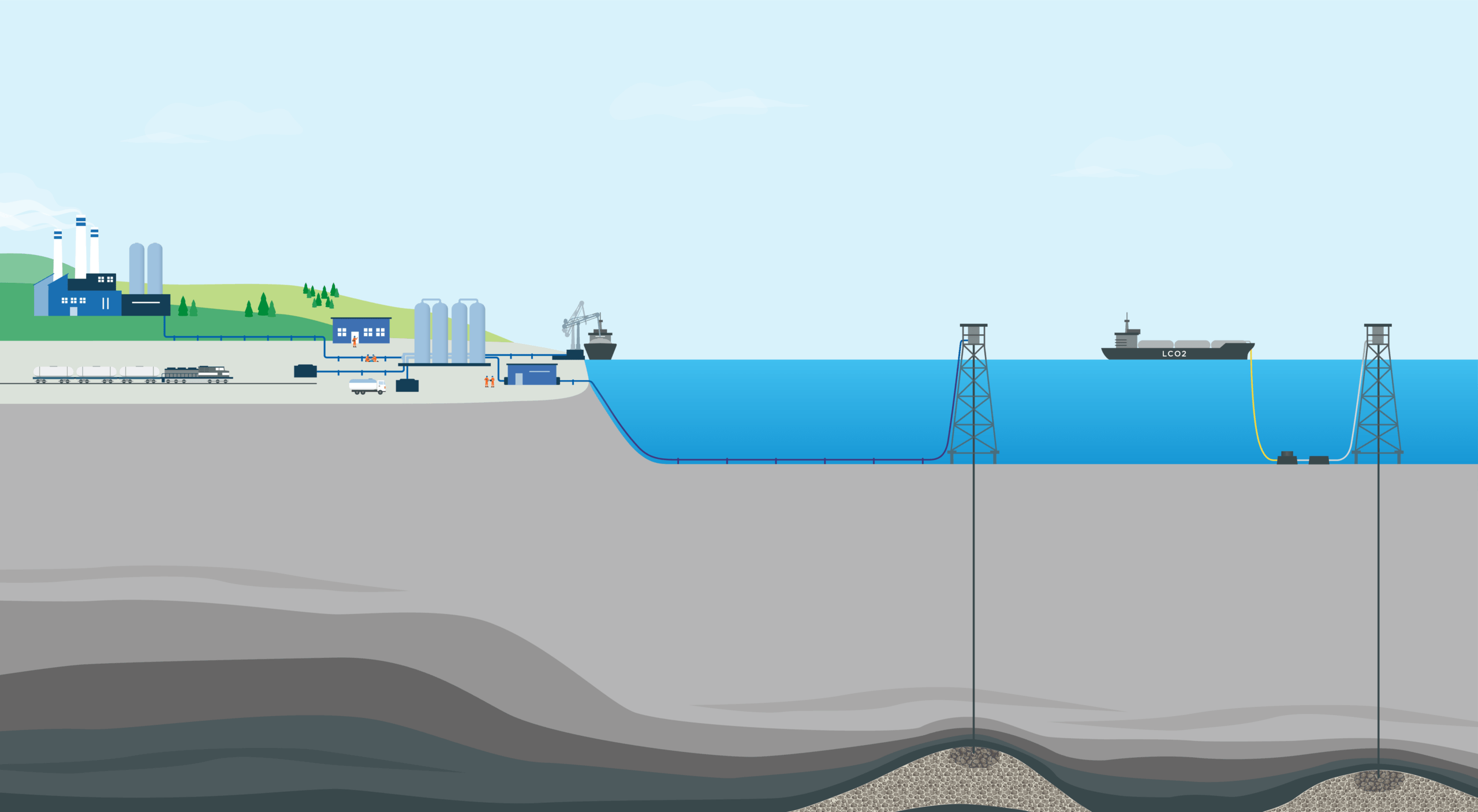
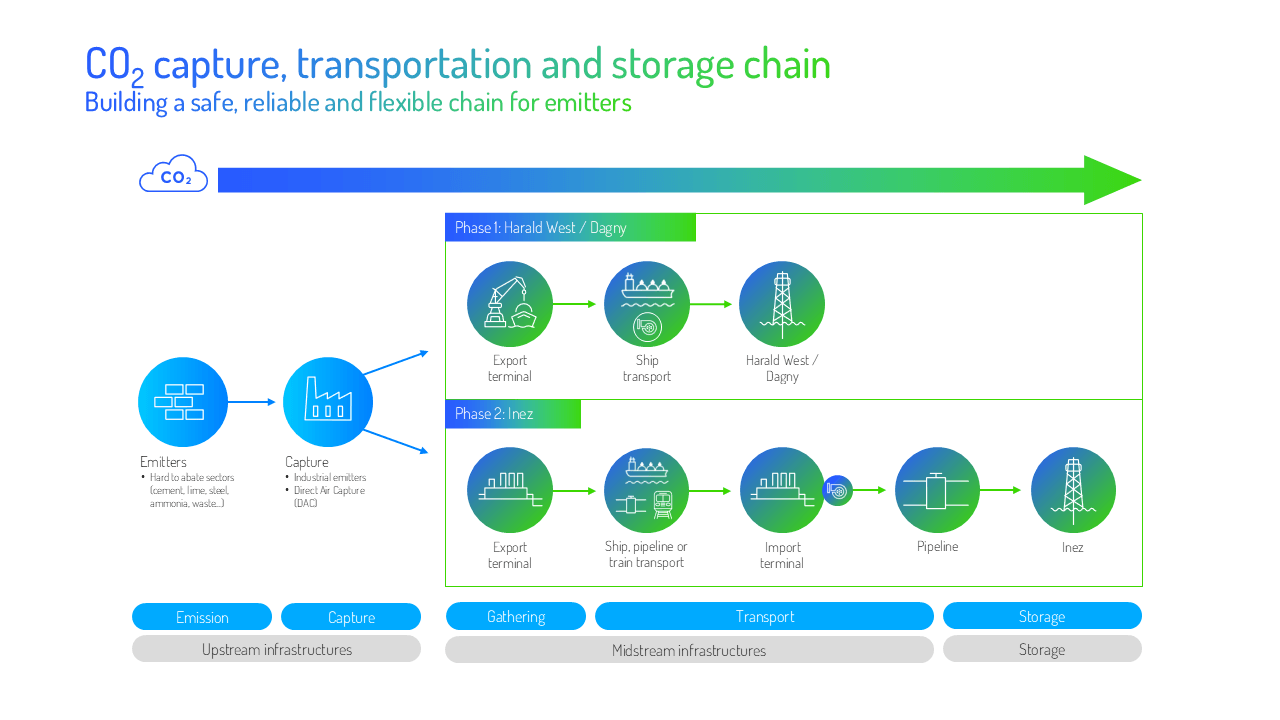
CO2 capture, transportation and storage chain
Project Bifrost is designed as open‑access infrastructure, connecting European industrial emitters to offshore geological storage in the Danish North Sea.
The CCS value chain consists of three main elements:
CO2 Capture

CO2 is captured at industrial facilities where emissions are difficult to eliminate through electrification or fuel switching. Capture technologies separate CO2 from flue gases or process streams, enabling significant emissions reductions at source. Captured CO2 is prepared for transport through compression and conditioning.
Transportation

Once captured, the CO2 is transported from industrial sites to offshore storage locations. Transportation solutions may include:
- Pipelines connecting capture sites and onshore hubs
- Ship transport, enabling flexible cross‑border connections across Northern Europe
This multimodal approach supports scalability and allows emitters from different regions to access offshore storage capacity.
Storage

The transported CO2 is injected deep underground into suitable geological formations beneath the seabed, such as depleted oil and gas reservoirs or saline aquifers. These formations are carefully selected and monitored to ensure safe, permanent storage of CO2 over the long term.